
Movers Waukee
Movers in Waukee, Iowa
Local movers serving the fastest-growing city in Iowa. From the historic Triangle Park downtown to the new builds going up around Kettlestone and Grand Prairie. Same-crew accountability, real itemized quotes, no brokers.
31,823
Waukee population
(2024 Special Census)
+33%
Population growth
since 2020
#1
Fastest-growing
city in Iowa
32.1
Median age
(young families)
Three patterns we see in Waukee moves
Waukee’s growth means most moves here are people coming in — not leaving. The patterns are different from older, established suburbs.
Renting → First home
First-home buyers
The biggest pattern in Waukee. Young families and couples moving out of apartments elsewhere in the metro and closing on a starter home in one of Waukee’s newer subdivisions. Often a 1- or 2-bedroom apartment’s worth of stuff plus a few new pieces from Costco or Target.
Another suburb → Waukee
Moving in for schools
Waukee Community School District is consistently rated one of Iowa’s best, which makes it a major reason families choose to move into the city. Often families coming from West Des Moines, Clive, or Urbandale who want their kids in Waukee schools.
Starter → Bigger home
Within-Waukee upsize
People who bought in Waukee five or ten years ago and need more space. Moving from one Waukee neighborhood to another — staying in the same school district, often staying close to the same trails and parks.
Waukee is the fastest-growing city in Iowa. The population was 23,940 at the 2020 Census. By the 2024 Special Census, that number had jumped to 31,823 — a 33% increase in four years. City officials project Waukee could reach 50,000 residents by 2040. That kind of growth shapes every part of the city, including the moves happening in and out of it.
The city sits on the far west side of the Des Moines metro in Dallas County, bordering West Des Moines, Clive, and Urbandale. It was founded in 1869 and named after the Milwaukee Road Railroad. The historic Triangle Park downtown, along 6th Street and Hickman Road, was the original commercial district and still hosts a weekly farmers market and community events. Most of Waukee, though, looks nothing like that. The vast majority of housing was built in the last 15 years, much of it in active subdivisions on the north and west sides.
A few real landmarks shape daily life in Waukee. The Vibrant Music Hall at Grand Prairie Parkway and Ashworth Road opened in November 2022 as Iowa’s first Live Nation venue, with a 3,300-seat capacity. The Kettlestone development along Alice’s Road is the city’s newer commercial and entertainment corridor — restaurants, retail, the Kettlestone Central Sports Complex with two fieldhouses. Apple’s $1.375 billion data center on Hickman Road, on 2,000 acres of land, opened its first building in 2024. The Raccoon River Valley Trail, a 72-mile paved loop, has its trailhead in Waukee at Hickman Road and 10th Street.
Midwest Moving Pros is a family-owned local moving company based in Des Moines, and we serve all of Waukee. We’re not a broker. The crew that loads in Waukee is the crew that unloads at the new place. The price on the quote is the price on the invoice.
Neighborhoods we move across in Waukee
Most of Waukee was built recently, but the city has older and newer sections with very different housing stock.
Triangle Park & Downtown Waukee
The original downtown, along 6th Street and Hickman Road. Older homes from the railroad era, walkable to the Triangle Park area and the weekly farmers market. Tighter doorways and stairs that come from older construction — we plan for that on every move.
Kettlestone & Grand Prairie
The newest part of the city. The Kettlestone corridor along Alice’s Road has restaurants, the Vibrant Music Hall, the sports complex, and the surrounding residential subdivisions. Most homes here are less than 10 years old — wide doorways, attached garages, easy access for loading.
Northwest Waukee
Active new-build subdivisions on the north and northwest sides. This is where most first-home buyers in Waukee end up. Single-family homes, full basements, three-car garages. Move-day access is usually straightforward.
Central Waukee subdivisions
Subdivisions built in the 1990s and 2000s, before the recent growth boom. Established trees, finished basements, settled HOAs. A common upsize destination for families moving within Waukee.
South Waukee toward Booneville
Southern and southwestern Waukee — newer subdivisions stretching toward the Raccoon River and Booneville. Larger lots, slightly more rural feel, often premium finishes inside the homes.
Older near-downtown homes
The blocks immediately around the Triangle Park area and along the older sections of Hickman Road. Mid-century homes, ranch styles, occasional bungalows. Smaller scale than the newer subdivisions, more walkable to downtown.
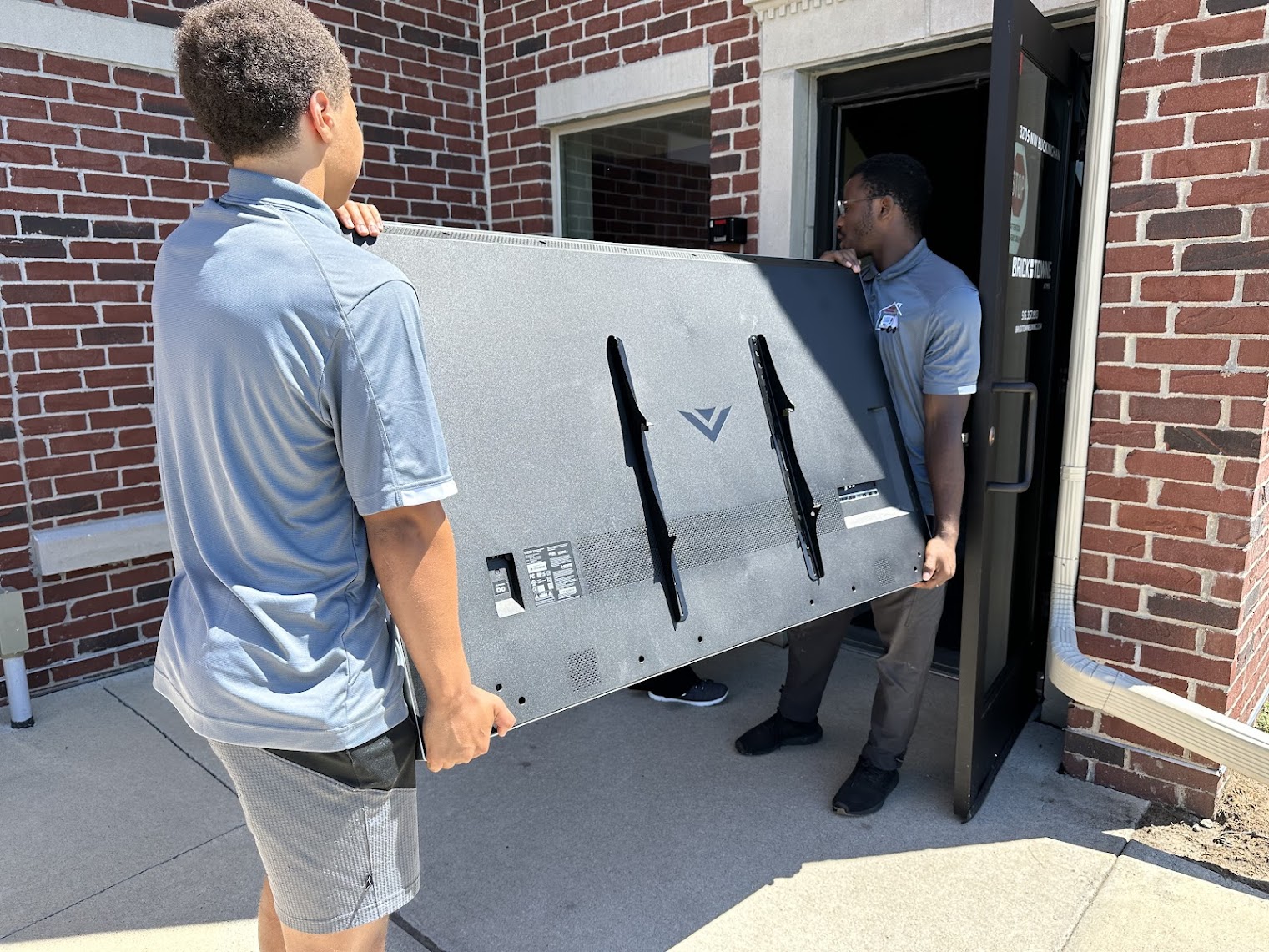
What moves look like in Waukee
A few things about Waukee specifically change how a move runs.
Most homes are less than 15 years old
Because of the rapid growth, the vast majority of Waukee housing was built in the last 15 years. Wide doorways. Open floor plans. Attached garages that double as staging areas on move day. Newer construction is generally easier to move into and out of than older homes. The move runs faster, the truck loads more efficiently, and there’s less furniture disassembly.
School district moves are common
The Waukee Community School District is a major reason families move here. The district has Waukee High School and Northwest High School (opened 2021), strong STEM programs, and consistently high test scores. Because of that, a lot of Waukee moves are families coming in from elsewhere in the metro specifically to be in this district. Some moves also happen across the district boundary line within West Des Moines — some West Des Moines neighborhoods are in the Waukee district, others are in WDMCS.
I-80 access shapes timing
The I-80 interchange at Alice’s Road opened in 2019, which made the west side of Waukee much more accessible from the rest of the metro. Most Waukee moves use I-80 or Hickman Road for the truck route. Timing is predictable because of straightforward highway access.
Active subdivisions still under construction
Plenty of Waukee subdivisions are still being built. New roads, construction equipment, and occasional unfinished streetscapes are part of the work. We confirm access details before move day on newer addresses — sometimes the street name on the closing paperwork isn’t in GPS yet.
Planning a move in or out of Waukee
A few practical things make a Waukee move go smoothly.
Book early for summer
Summer (May through August) is peak family-moving season in Iowa, and Waukee gets a heavy share of that demand because of the school district draw. End-of-month Fridays book first. If your closing is locked in for an end-of-month summer Friday, get on the calendar as soon as the date is confirmed.
Confirm the district at your specific address
If schools are part of why you’re moving, confirm the district at the specific address — not the city. The Waukee Community School District covers most of Waukee but also includes parts of West Des Moines, Clive, and Urbandale. The Waukee schools website has an address lookup tool. Iowa also has open enrollment for families who want to send kids to a different district than where they live, but the typical deadline is March 1 for the following school year.
New subdivisions may not show in GPS
Streets in actively building subdivisions sometimes aren’t in Google Maps yet. If your new address is in a very new development, send us the plat name and any landmarks — we’ll route the truck correctly. We’ve done plenty of these and we plan for them.
Coordinate with builder timing
Some Waukee moves coincide with new-construction closings, which can shift. We don’t charge a fee for rescheduling when the closing date moves — just let us know as soon as you know.
What a Waukee move costs
Our pricing is the same for Waukee as for the rest of the metro. Straightforward hourly rate. No trip charges. No stair surcharges. No surge pricing for weekends or end-of-month dates.
$160 per hour covers the crew, truck, fuel, pads, dollies, and basic moving insurance.
Flat $100 add for items too heavy for our standard crew (large gun safes, heavy pianos). That’s the only surcharge.
$50 deposit holds your local move date and applies to the final invoice. Long-distance moves use a $300 deposit.
Most Waukee moves fall between $370 (small apartment) and $1,810 (4-bedroom home). The written quote you get after the walkthrough is more specific than this range.
Moving in or out of Waukee?
Itemized written quote within 24 hours. Same crew start to finish. The price on the quote matches the price on the invoice.
USDOT 4199938·MC 1620099·Family-owned in Des Moines·4.9 ★ from 71 Google reviews